Link - Fore - Upper - Rear - LH (Remove and Replace)
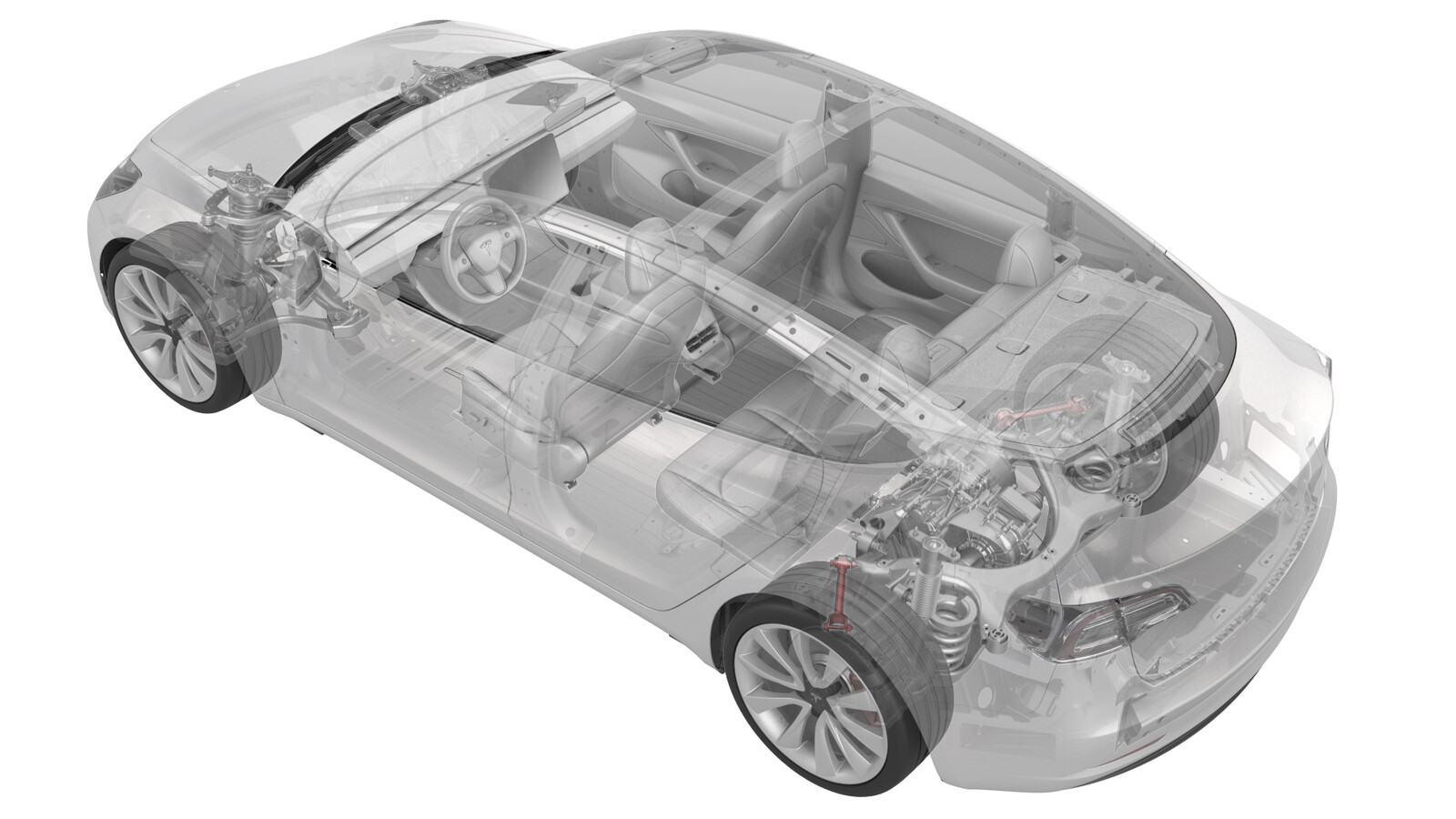 Correction code
31031402
0.54
NOTE: Unless otherwise explicitly
stated in the procedure, the correction code and its associated FRT reflect all of the
work required to perform this procedure, including the linked procedures. Do not stack correction codes unless
explicitly told to do so.
NOTE: See Flat Rate
Times to learn more about FRTs and how they are created.
NOTE: See Personal Protection to make sure wearing proper PPE when
performing the below procedure. NOTE: See Ergonomic Precautions for safe and healthy working
practices.
- 2026-10-09: Updated the procedure to remove the rear upper fore link by partially lowering the rear subframe assembly.
Equipment:
- 1135103-00-A Tool, Spring Compressor, Hook, Model 3
Remove
- Inspect the vehicle for abnormal tire wear that might indicate the need for a wheel alignment. Note any findings.
- Raise and support the vehicle. See Raise Vehicle - 2 Post Lift.
-
Partially lower the rear subframe and drive unit assembly with the subframe lifting
tool to allow for the upcoming removal of the rear upper fore link bolts. See Subframe Assembly - Rear (Remove and Install).
NoteDO NOT remove the rear subframe away from the vehicle. Recommend lowering the rear subframe for 4 inches or 10.25 cm.NoteThere's no need to disconnect the rear drive unit inverter inlet hose and coolant outlet hose.CAUTIONUse caution while lowering the subframe as multiple components are still attached. Do not overstrain these components. Coolant lines are still connected. Observe pinch points. Recommend assistance.
-
Remove the bolt and nut that attach
the LH rear upper fore link to the knuckle.
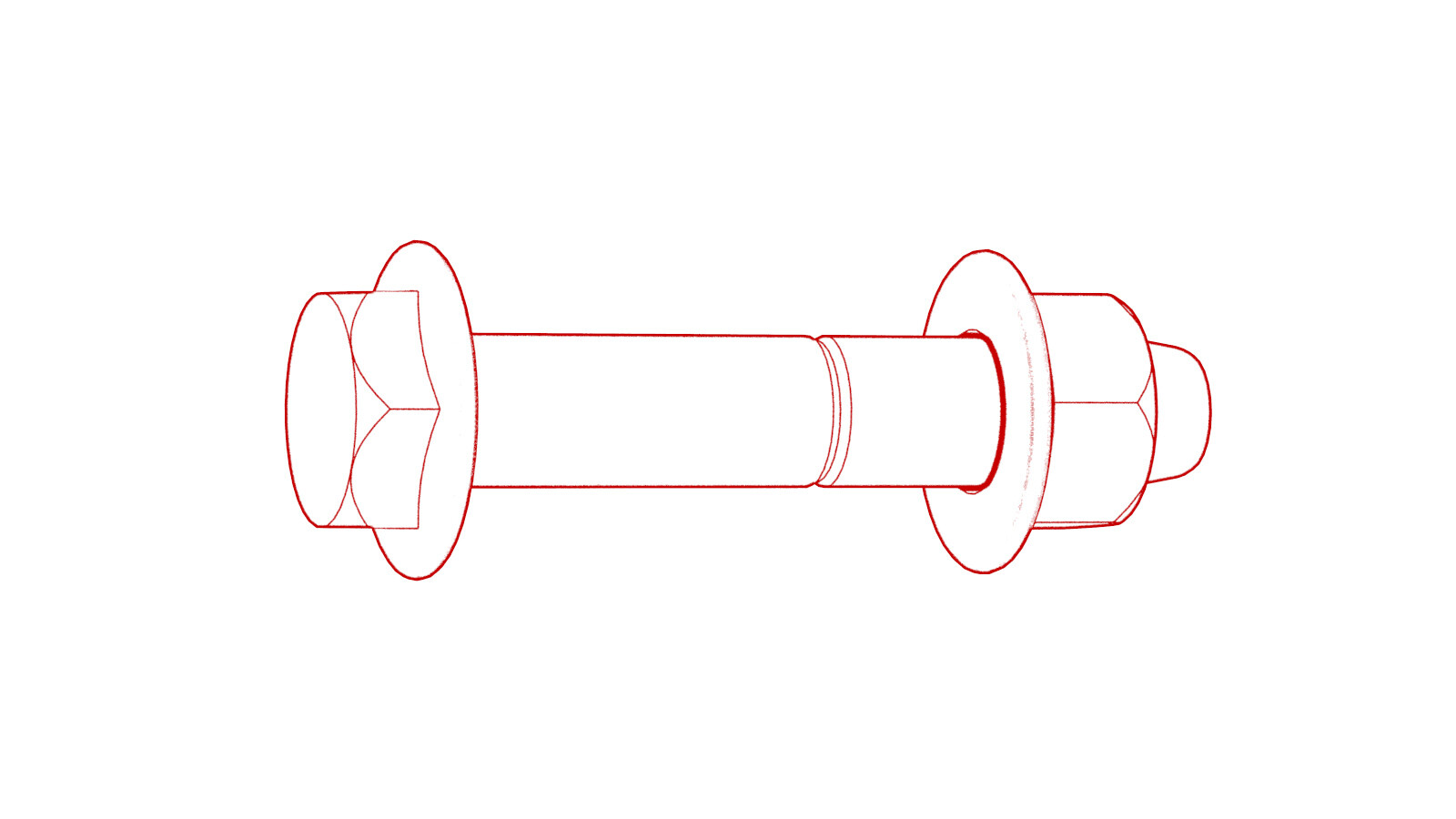 76 Nm (56.0 lbs-ft)
-
Remove the bolt and nut that attach
the LH rear upper fore link to the subframe.76 Nm (56.0 lbs-ft)NoteTurn the bolt a few times to feed the end out while maneuvering the upper fore link to allow just enough space to remove the link from the rear subframe. Refer to the video above.
-
Remove the LH rear upper
fore link from the vehicle.
Install
-
Install LH rear upper fore link to subframe and hand tighten nut and bolt.
NoteTorque at later step.CAUTIONDo not force the bolt into position. Turn the bolt a few times to align while maneuvering the link. Refer to the video above.
-
Install nut and bolt securing LH rear upper fore link to knuckle.
NoteTorque at later step.
-
Slowly raise the rear subframe and rear drive unit assembly into position, and
install the rear subframe assembly.
CAUTIONTake care not to damage HV harnesses and coolant hoses during lifting of the subframe.
-
Hand-tighten new bolts (x2) that
attach the rear subframe to the body.
NoteThe tightening of the bolts will be performed later in this procedure.
-
Install the LH shear plate to the rear
subframe and HV battery, and then hand-tighten the bolt that attaches the shear plate to
the subframe.
NoteThe tightening of the bolt will be performed later in this procedure.
-
Hand-tighten the smaller bolts that
attach the LH shear plate to the HV battery.
NoteThe tightening of the bolts will be performed later in this procedure.
- Repeat steps GUID-452A1E31-5D1E-4B1A-8C3E-746FDEE81B72.html#TASK_TV5_1BD_VKB__GUID-A17437E0-857E-4977-8F26-FEE830EE6A39 and GUID-452A1E31-5D1E-4B1A-8C3E-746FDEE81B72.html#TASK_TV5_1BD_VKB__GUID-679E21DE-1E70-4465-8893-15CB39682E4A on the RH shear plate.
-
Position the subframe to the locations
as marked during removal.
NoteReturn the subframe to its original position as closely as possible.
-
Torque the bolts that attach the LH
and RH rear subframe to the body, and then mark them with a paint pen after torquing.
TipUse of the following tool(s) is recommended:
-
Torque the large bolts that attach the
LH and RH shear plates to the vehicle, and then mark them with a paint pen after
torquing.
 125 Nm (92.2 lbs-ft)TipUse of the following tool(s) is recommended:
- 21 mm socket
- 6 in extension
-
Torque the smaller bolts that attach
the LH and RH shear plates to the vehicle.
35 Nm (25.8 lbs-ft)TipUse of the following tool(s) is recommended:
- 13 mm socket
- 3 in extension
-
Fasten the fir tree clips that attach
the coolant hoses to the LH and RH shear plates.
LH shear plate shown, RH shear plate similar
- Release the straps and lower the subframe lifting tool.
- Disconnect the air line from the subframe lifting tool, and then remove the tool from under the vehicle.
-
Fully raise the handle on the HV
battery rear drive unit connector of the rear drive unit to HV battery harness.
-
Install the HV connector special tool
onto the HV battery rear drive unit connector.
-
Use both hands to firmly connect the
HV battery rear drive unit connector of the rear drive unit to HV battery harness to the
HV battery header.
CAUTIONMake sure that the connector fits the header squarely and tightly, and that both retention pins enter the handle.
- Remove the HV connector special tool from the HV battery rear drive unit connector.
-
Slide the release to lock the HV
battery rear drive unit connector handle in the secured position.
-
Verify that the HV battery rear drive
unit connector is fully seated, and compare both sides of the connector that it is
properly secured in place.
NoteAn improperly seated connector might lead to connector damage and rear drive unit problems later on.
-
Install the nut that attaches the rear
drive unit HV electrical harness bracket to the HV battery.
 10 Nm (7.4 lbs-ft)TipUse of the following tool(s) is recommended:
- 10 mm socket
- 4 in extension
- Install the rear HV battery skid plate. See Skid Plate - HV Battery - Rear (Remove and Replace).
- Install the rear stabilizer bar. See Stabilizer Bar - Rear (Remove and Replace).
-
Fasten the LH and RH subframe
electrical harness barrel clip to the body.
-
Connect the electrical connector for
the LH and RH side 12V subframe harness.
Figure 1. LH side shown, RH similar -
Install the bolt that attaches the
rear drive unit ground strap to the body.
 10 Nm (7.4 lbs-ft)TipUse of the following tool(s) is recommended:
- 10 mm 12-point deep socket
NoteReinstall the washer if the vehicle had this washer during removal. -
Install the bolts that attach the LH
and RH rear dampers at the top mount.
 41 Nm (30.2 lbs-ft)TipUse of the following tool(s) is recommended:
- 15 mm socket
- 3 in extension
LH shown; RH similar.
-
Remove the spring compressor from the
LH and RH rear coil spring.
-
Install the LH and RH rear brake
caliper brackets onto the knuckle, and then install the bolts that attach the caliper
brackets to the knuckle.
 83 Nm (61.2 lbs-ft)TipUse of the following tool(s) is recommended:
- External Torx E18
LH rear brake caliper shown, RH rear brake caliper similar.
-
Remove the bolt that attaches the brake rotor to the hub.
NoteUse of the following tool(s) is recommended:
- 10 mm socket
- 2 in extension
-
Install the hub jack adapter onto the LH rear hub and hand-tighten the lug
nuts.
-
Use an underhoist stand to support the hub jack adapter.
NoteUse the rear ride height torque gauge to verify that the rear suspension is set to ride height specifications and adjust the support stand or spring compressor tool , if necessary.
-
Measure the distance between
the bottom of the quarter panel to the center of the rear axle to make sure
that the rear suspension is set to ride height: The distance should measure
378 mm.
-
Torque the bolt and nut that attach the LH rear upper fore link to the subframe.76 Nm (56.0 lbs-ft)
-
Torque the bolt and nut that attach the LH rear upper fore link to the knuckle.76 Nm (56.0 lbs-ft)
-
Remove the underhoist stand from underneath the LH rear suspension.
-
Remove the lug nuts that attach the hub jack adapter, and then remove the
hub jack adapter from the vehicle.
-
Install the bolt that attaches the LH rear brake rotor to the hub.
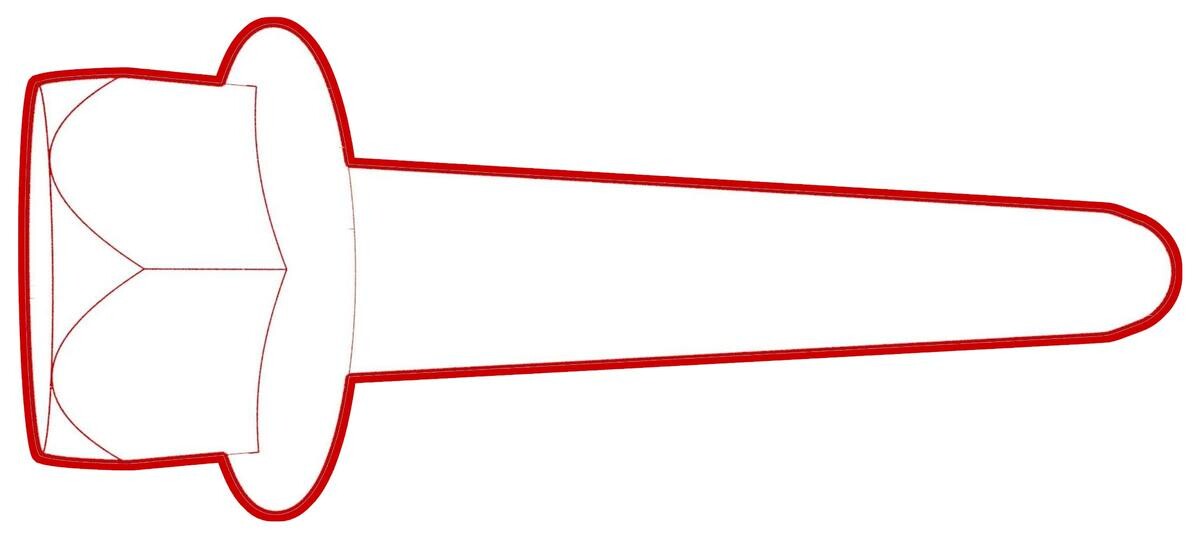 5 Nm (3.7 lbs-ft)NoteUse of the following tool(s) is recommended:
- 10 mm socket
- 2 in extension
- Remove the spring compressor from the rear LH spring.
- Install the rear fascia diffuser. See Diffuser - Rear Fascia (Remove and Replace).
- Install the rear aero shield. See Panel - Aero Shield - Rear (Remove and Replace).
- Install the clips that attach the LH and RH wheel liner to the rear fascia.
- Install the LH and RH rear suspension covers. See Cover - Rear Suspension - LH (Remove and Replace).
- Install the LH and RH rear wheels. See Wheel Assembly (Remove and Install).
- Connect 12V power. See 12V/LV Power (Disconnect and Connect).
- Press and hold the Park button on the gear selector to release the EPB service mode.
- Install the rear underhood apron. See Underhood Apron - Rear (Remove and Replace).
- Install the 2nd row lower seat cushion. See Seat Cushion - Lower - 2nd Row (Remove and Replace).
- Restore the driver and front passenger seats back to their original positions.
- Remove the vehicle from the lift.
-
Perform a validation test drive after repair. Drive at a minimum speed of 25 mph in a
straight line, check for excessive pull, verify the steering wheel is centered when the
vehicle is driving straight, and determine whether an alignment is recommended.
NoteAdd correction code 00040100 as needed.
- Refer to the Alignment Requirement tables to determine whether an EPAS alignment check (EC) or four wheel alignment check (AC) is necessary. If performed, add the alignment check/adjust correction code as a separate activity to the SV. See Alignment Requirement - Suspension.